The Autobiography of
Benjamin Franklin
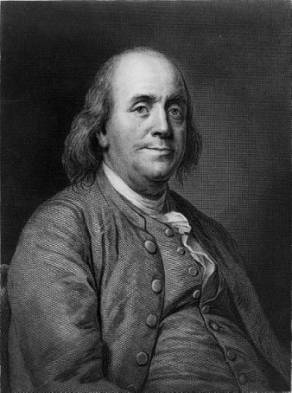
This
edition first published 1909
Red and Black Publishers, PO Box 7542, St Petersburg, Florida, 33734
Contact us at: info@RedandBlackPublishers.com
The Autobiography of
Benjamin Franklin
This
edition first published 1909
Red and Black Publishers, PO Box 7542, St Petersburg, Florida, 33734
Contact us at: info@RedandBlackPublishers.com
DEAR
SON: I have ever had pleasure in obtaining any little anecdotes of my ancestors.
You may remember the inquiries I made among the remains of my relations when you
were with me in England, and the journey I undertook for that purpose. Imagining
it may be equally agreeable to you to know the circumstances of my life, many of
which you are yet unacquainted with, and expecting the enjoyment of a week’s
uninterrupted leisure in my present country retirement, I sit down to write them
for you. To which I have besides some other inducements. Having emerged from the
poverty and obscurity in which I was born and bred, to a state of affluence and
some degree of reputation in the world, and having gone so far through life with
a considerable share of felicity, the conducing means I made use of, which with
the blessing of God so well succeeded, my posterity may like to know, as they
may find some of them suitable to their own situations, and therefore fit to be
imitated.
That
felicity, when I reflected on it, has induced me sometimes to say, that were it
offered to my choice, I should have no objection to a repetition of the same
life from its beginning, only asking the advantages authors have in a second
edition to correct some faults of the first. So I might, besides correcting the
faults, change some sinister accidents and events of it for others more
favorable. But though this were denied, I should still accept the offer. Since
such a repetition is not to be expected, the next thing most like living one’s
life over again seems to be a recollection of that life, and to make that
recollection as durable as possible by putting it down in writing.
Hereby,
too, I shall indulge the inclination so natural in old men, to be talking of
themselves and their own past actions; and I shall indulge it without being
tiresome to others, who, through respect to age, might conceive themselves
obliged to give me a hearing, since this may be read or not as any one pleases.
And, lastly (I may as well confess it, since my denial of it will be believed by
nobody), perhaps I shall a good deal gratify my own vanity. Indeed, I scarce
ever heard or saw the introductory words, “Without vanity I may say,”
&c., but some vain thing immediately followed. Most people dislike vanity in
others, whatever share they have of it themselves; but I give it fair quarter
wherever I meet with it, being persuaded that it is often productive of good to
the possessor, and to others that are within his sphere of action; and
therefore, in many cases, it would not be altogether absurd if a man were to
thank God for his vanity among the other comforts of life.
And
now I speak of thanking God, I desire with all humility to acknowledge that I
owe the mentioned happiness of my past life to His kind providence, which lead
me to the means I used and gave them success. My belief of this induces me to
hope, though I must not presume, that the same goodness will still be exercised
toward me, in continuing that happiness, or enabling me to bear a fatal reverse,
which I may experience as others have done: the complexion of my future fortune
being known to Him only in whose power it is to bless to us even our
afflictions.
The
notes one of my uncles (who had the same kind of curiosity in collecting family
anecdotes) once put into my hands, furnished me with several particulars
relating to our ancestors. From these notes I learned that the family had lived
in the same village, Ecton, in Northamptonshire, for three hundred years, and
how much longer he knew not (perhaps from the time when the name of Franklin,
that before was the name of an order of people, was assumed by them as a surname
when others took surnames all over the kingdom), on a freehold of about thirty
acres, aided by the smith’s business, which had continued in the family till
his time, the eldest son being always bred to that business; a custom which he
and my father followed as to their eldest sons. When I searched the registers at
Ecton, I found an account of their births, marriages and burials from the year
1555 only, there being no registers kept in that parish at any time preceding.
By that register I perceived that I was the youngest son of the youngest son for
five generations back. My grandfather Thomas, who was born in 1598, lived at
Ecton till he grew too old to follow business longer, when he went to live with
his son John, a dyer at Banbury, in Oxfordshire, with whom my father served an
apprenticeship. There my grandfather died and lies buried. We saw his gravestone
in 1758. His eldest son Thomas lived in the house at Ecton, and left it with the
land to his only child, a daughter, who, with her husband, one Fisher, of
Wellingborough, sold it to Mr. Isted, now lord of the manor there. My
grandfather had four sons that grew up, viz.: Thomas, John, Benjamin and Josiah.
I will give you what account I can of them, at this distance from my papers, and
if these are not lost in my absence, you will among them find many more
particulars.
Thomas
was bred a smith under his father; but, being ingenious, and encouraged in
learning (as all my brothers were) by an Esquire Palmer, then the principal
gentleman in that parish, he qualified himself for the business of scrivener;
became a considerable man in the county; was a chief mover of all
public-spirited undertakings for the county or town of Northampton, and his own
village, of which many instances were related of him; and much taken notice of
and patronized by the then Lord Halifax. He died in 1702, January 6, old style,
just four years to a day before I was born. The account we received of his life
and character from some old people at Ecton, I remember, struck you as something
extraordinary, from its similarity to what you knew of mine.
“Had
he died on the same day,” you said, “one might have supposed a
transmigration.”
John
was bred a dyer, I believe of woolens. Benjamin was bred a silk dyer, serving an
apprenticeship at London. He was an ingenious man. I remember him well, for when
I was a boy he came over to my father in Boston, and lived in the house with us
some years. He lived to a great age. His grandson, Samuel Franklin, now lives in
Boston. He left behind him two quarto volumes, MS., of his own poetry,
consisting of little occasional pieces addressed to his friends and relations,
of which the following, sent to me, is a specimen. He had formed a short-hand of
his own, which he taught me, but, never practising it, I have now forgot it. I
was named after this uncle, there being a particular affection between him and
my father. He was very pious, a great attender of sermons of the best preachers,
which he took down in his short-hand, and had with him many volumes of them. He
was also much of a politician; too much, perhaps, for his station. There fell
lately into my hands, in London, a collection he had made of all the principal
pamphlets, relating to public affairs, from 1641 to 1717; many of the volumes
are wanting as appears by the numbering, but there still remain eight volumes in
folio, and twenty-four in quarto and in octavo. A dealer in old books met with
them, and knowing me by my sometimes buying of him, he brought them to me. It
seems my uncle must have left them here, when he went to America, which was
about fifty years since. There are many of his notes in the margins.
This
obscure family of ours was early in the Reformation, and continued Protestants
through the reign of Queen Mary, when they were sometimes in danger of trouble
on account of their zeal against popery. They had got an English Bible, and to
conceal and secure it, it was fastened open with tapes under and within the
cover of a joint-stool. When my great-great-grandfather read it to his family,
he turned up the joint-stool upon his knees, turning over the leaves then under
the tapes. One of the children stood at the door to give notice if he saw the
apparitor coming, who was an officer of the spiritual court. In that case the
stool was turned down again upon its feet, when the Bible remained concealed
under it as before. This anecdote I had from my uncle Benjamin. The family
continued all of the Church of England till about the end of Charles the
Second’s reign, when some of the ministers that had been outed for
nonconformity holding conventicles in Northamptonshire, Benjamin and Josiah
adhered to them, and so continued all their lives: the rest of the family
remained with the Episcopal Church.
Josiah,
my father, married young, and carried his wife with three children into New
England, about 1682. The conventicles having been forbidden by law, and
frequently disturbed, induced some considerable men of his acquaintance to
remove to that country, and he was prevailed with to accompany them thither,
where they expected to enjoy their mode of religion with freedom. By the same
wife he had four children more born there, and by a second wife ten more, in all
seventeen; of which I remember thirteen sitting at one time at his table, who
all grew up to be men and women, and married; I was the youngest son, and the
youngest child but two, and was born in Boston, New England. My mother, the
second wife, was Abiah Folger, daughter of Peter Folger, one of the first
settlers of New England, of whom honorable mention is made by Cotton Mather in
his church history of that country, entitled Magnalia Christi Americana,
as “a godly, learned Englishman,” if I remember the words rightly. I have
heard that he wrote sundry small occasional pieces, but only one of them was
printed, which I saw now many years since. It was written in 1675, in the
home-spun verse of that time and people, and addressed to those then concerned
in the government there. It was in favor of liberty of conscience, and in behalf
of the Baptists, Quakers, and other sectaries that had been under persecution,
ascribing the Indian wars, and other distresses that had befallen the country,
to that persecution, as so many judgments of God to punish so heinous an
offense, and exhorting a repeal of those uncharitable laws. The whole appeared
to me as written with a good deal of decent plainness and manly freedom. The six
concluding lines I remember, though I have forgotten the two first of the
stanza; but the purport of them was that his censures proceeded from good-will,
and, therefore, he would be known to be the author.
“Because
to be a libeller (says he) I hate it with my heart; From Sherburne town, where
now I dwell, My name I do put here; Without offense your real friend, It is
Peter Folgier.”
My
elder brothers were all put apprentices to different trades. I was put to the
grammar-school at eight years of age, my father intending to devote me, as the
tithe of his sons, to the service of the Church. My early readiness in learning
to read (which must have been very early, as I do not remember when I could not
read), and the opinion of all his friends that I should certainly make a good
scholar, encouraged him in this purpose of his. My uncle Benjamin, too, approved
of it, and proposed to give me all his short-hand volumes of sermons, I suppose
as a stock to set up with if I would learn his character. I continued, however,
at the grammar-school not quite one year, though in that time I had risen
gradually from the middle of the class of that year to be the head of it, and
farther was removed into the next class above it, in order to go with that into
the third at the end of the year. But my father, in the meantime, from a view of
the expense of a college education, which having so large a family he could not
well afford, and the mean living many so educated were afterwards able to
obtain—reasons that he gave to his friends in my hearing—altered his first
intention, took me from the grammar-school, and sent me to a school for writing
and arithmetic, kept by a then famous man, Mr. George Brownell, very successful
in his profession generally, and that by mild, encouraging methods. Under him I
acquired fair writing pretty soon, but I failed in the arithmetic, and made no
progress in it. At ten years old I was taken home to assist my father in his
business, which was that of a tallow-chandler and sope-boiler; a business he was
not bred to, but had assumed on his arrival in New England, and on finding his
dying trade would not maintain his family, being in little request. Accordingly,
I was employed in cutting wick for the candles, filling the dipping mold and the
molds for cast candles, attending the shop, going of errands, etc.
I
disliked the trade, and had a strong inclination for the sea, but my father
declared against it; however, living near the water, I was much in and about it,
learnt early to swim well, and to manage boats; and when in a boat or canoe with
other boys, I was commonly allowed to govern, especially in any case of
difficulty; and upon other occasions I was generally a leader among the boys,
and sometimes led them into scrapes, of which I will mention one instance, as it
shows an early projecting public spirit, though not then justly conducted.